

I have some eldest daughter energy.
Note: there are similarities between the eldest daughter and the first-born daughter but also massive divergence. I am not that fierce.
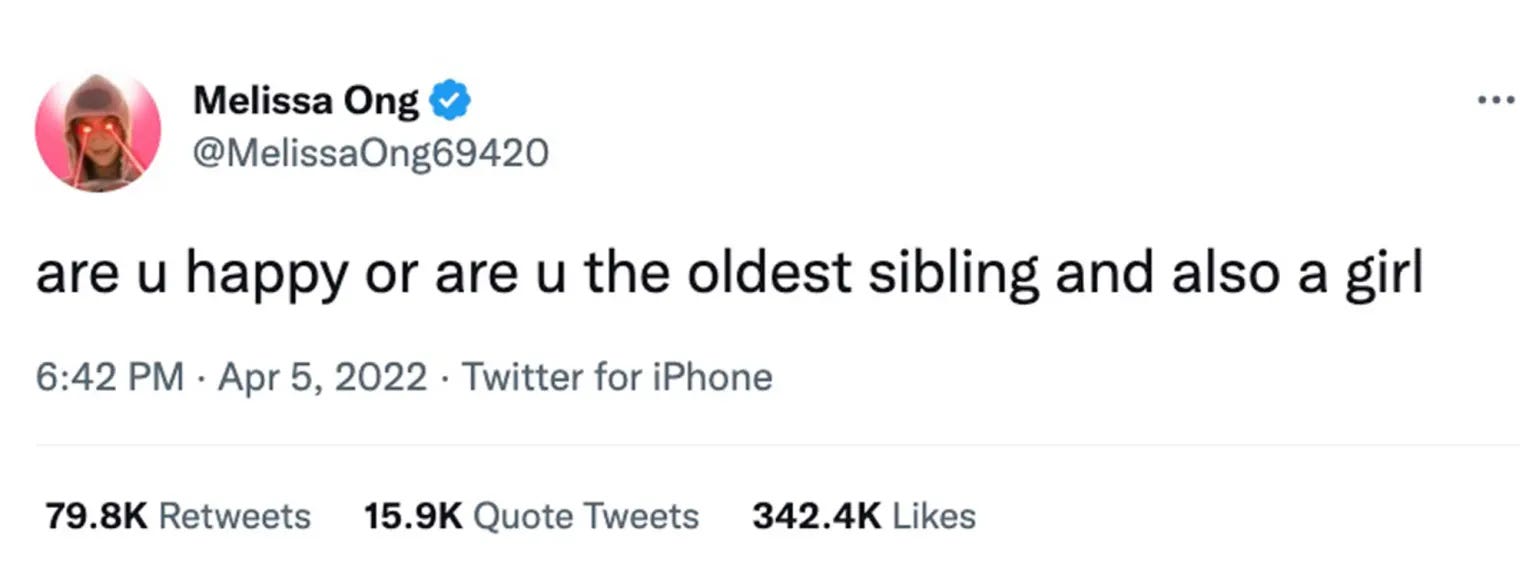
Technically, I am the eldest daughter. I grew up with older brothers. But I grew up in a family with fairly traditional gender expectations, so as adults it’s me who makes the itinerary and sends the invitations. Someone has a hospital appointment? I’ll drive. Someone doesn’t have a ride home? I got you.

But I do have older siblings, and no younger ones. So I have some pretty serious pōtiki vibes too.1 I am accustomed to getting what I want, desperate for attention, rebellious and rule-bending, sociable and outgoing, and CONSTANTLY feeling underestimated.
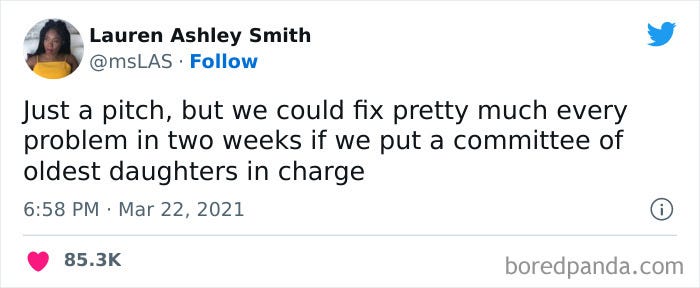
But. BUT. My brothers were 5 and 8 years older than me. They got out of the house as soon as they could, and stopped coming on family holidays way before that. From around age 8, a lot of the time it was just me and my parents. I’ve realised I never really learned how to make up and reconnect after a falling out. I always seemed older than my age. I value my independence. I am highly sensitive to criticism.
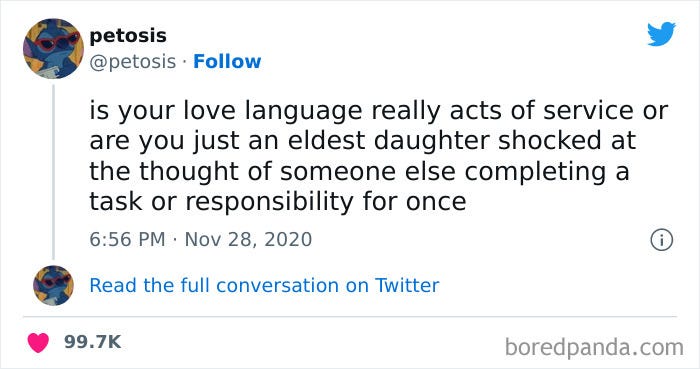
I toggle between these roles like the 432 browser tabs I have open. They all contribute to my identity, but what they mainly contribute to is a great scepticism about any birth order beliefs that claim to be based in science. Without knowing other details like gender (and gender roles in your family), age gaps, family composition and so on, birth order will only ever be a small piece of the identity puzzle.
Is it a piece that’s important to you?
Pо̄tiki means youngest child in te reo Māori